

 By
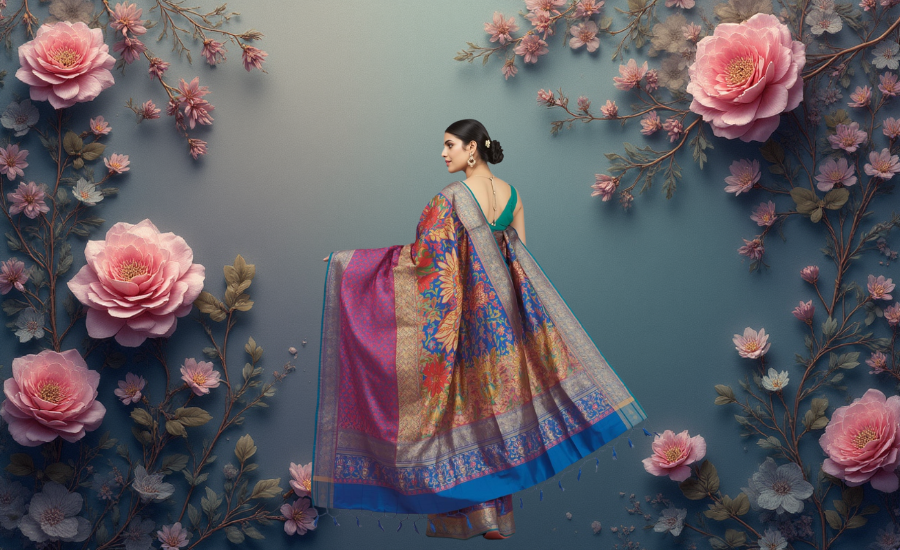
By Few textiles in India carry the same aura of mystery, precision, and royal elegance as the Patola saree. Known for its luxurious feel, intricate patterns, and painstakingly detailed craftsmanship, Patola is not just a garment — it’s a woven masterpiece. Originating from Gujarat, this heritage weave has been treasured for centuries by queens, aristocrats, and connoisseurs of fine textiles.
Today, Patola sarees are cherished as heirlooms and celebrated as symbols of Indian craftsmanship at its finest. But what truly makes Patola so special? Let’s unveil the secrets behind this centuries-old art.
A Royal Legacy That Stands the Test of Time
Patola weaving traces its roots to the 11th century in Patan, Gujarat, where the Salvi family of weavers mastered the double ikat technique — one of the most complex textile arts in the world. Historically, Patola sarees were prized possessions of royal families in Gujarat, Maharashtra, and Southeast Asia.
The saree’s immense value comes not only from its rarity but from its symbolism. Patola patterns, colours, and motifs were believed to bring luck, prosperity, and protection, making them essential for weddings, rituals, and auspicious occasions.
The Double Ikat Magic: A Technique Few Can Master
The process of making a Patola saree is nothing short of extraordinary. Unlike ordinary weaving, Patola uses the double ikat technique — where both warp and weft threads are dyed before weaving. This requires complete precision because every tiny segment of thread must align perfectly to form the final pattern.
Here’s what makes the craft so exceptional:
- Months of planning the design
- Tying and dyeing thousands of threads
- Mastery of mathematical accuracy
- Hand-weaving each thread in perfect alignment
It is said that a single Patola saree can take six months to one year to complete, depending on its complexity. This meticulous technique gives Patola its signature sharpness, symmetry, and unmatched detail.
Patterns with Meaning and Soul
Every motif in a Patola saree carries cultural significance. Some iconic designs include:
- Nari-Kunjar (Woman and Elephant) – Symbol of prosperity
- Phool Jari (Floral patterns) – Celebrates nature and beauty
- Paithani-inspired parrots and peacocks – Sign of harmony
- Geometric diamonds and grids – Timeless and universal motifs
These motifs highlight Gujarat’s rich history and the weavers’ artistic imagination. A Patola saree is not just a piece of clothing — it’s a story woven with symbolism and tradition.
Colours That Stand Forever
One of the most admired secrets of Patola sarees is that their colours never fade. The weavers traditionally use natural dyes derived from:
- Pomegranate rinds
- Marigold flowers
- Indigo leaves
- Turmeric
- Natural minerals
The dyeing process is slow and delicate, but it ensures that Patola sarees retain their brilliance for generations. This is why many families still preserve Patola sarees passed down through decades.
Patola Today: A Blend of Heritage and Modern Elegance
In recent years, Patola has transitioned from royal courts to contemporary wardrobes. Designers and textile lovers are embracing Patola for:
- Wedding trousseaus
- Grand festive events
- Luxury fashion showcases
- Heirloom collections
Its rich colours, geometric beauty, and timeless elegance make Patola sarees a favourite among brides who want to showcase India’s artistic legacy with a touch of luxury.
Why Patola Is More than Just a Saree
A Patola saree reflects:
- Unmatched craftsmanship
- Generational skill passed down through families
- Cultural depth and storytelling
- Artistry that takes months to execute
- The soul of Gujarat’s textile heritage
Owning a Patola is like owning a piece of history. Each saree represents the dedication, discipline, and artistic brilliance of artisans who keep this rare craft alive.
Final Thoughts
The Patola saree stands as a shining example of India’s rich textile heritage — a blend of tradition, culture, and exquisite craftsmanship. When you wear a saree or Patola lehenga, you’re not just wearing a saree; you’re draping centuries of history, devotion, and artistic mastery.